portable bottle warmer technology is changing the way parents feed babies on the go, but real-world practicality—not just tech specs—decides if a model is worth packing for your next trip.
Key Takeaways
- Travel use drives growth: About 48% of bottle warmer sales are portable models, with travel-ready features in high demand and expanding at over 8% annually.
- Parents’ top priorities: Fast, consistent warming, leakproof operation, battery capacity, and no-fuss cleaning beat flashy features when you’re juggling flights, car rides, or daycare drop-off.
- Smart picks solve real problems: Features like precise temp control, pour‐in designs, and USB‐C pass-through charging directly address actual travel frustrations that many guides ignore.
- Market snapshot — why travel warmers are a growth category
- Top travel use cases (when to reach for a portable bottle warmer)
- Most common user frustrations to watch for
- Features most guides overlook (the unique insight — prioritize these)
- How heating mechanism changes your travel experience
- Quick shopping checklist — must-haves and red flags for travel
- Side-by-side comparison framework to use in the article
- Best-for recommendations (short picks by travel scenario)
- How to use a travel warmer safely and efficiently (pro tips)
- Accessories worth buying (small upsell section)
- FAQ
Market snapshot — why travel warmers are a growth category
Portable bottle warmer sales are booming—especially for families who value flexible, safe baby travel feeding. According to 2024 market research, portable-smart models now capture nearly 48% of all bottle warmer sales. The push comes from two big trends: family travel rebounding after pandemic lulls, and the near-universal availability of USB‑C, car, and power bank charging everywhere you go.
Travel use already accounts for 32.8% of portable bottle warmer revenue (2025) and is projected to grow at about 8.6% CAGR through the next decade.[4] Parents want devices that actually work in unpredictable car, plane, and out‐of‐house scenarios.
Top travel use cases (when to reach for a portable bottle warmer)
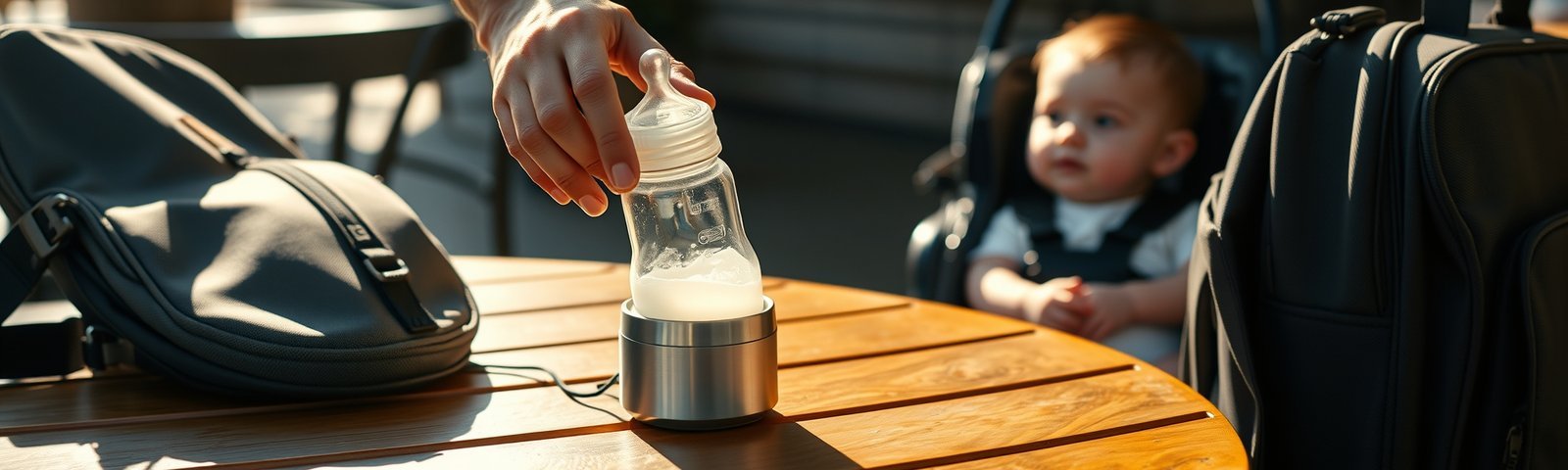
Not every travel day is the same. Here’s when a portable bottle warmer for travel earns its spot:
- Airplane travel: Cordless battery or USB-powered models, preferably small enough for carry-on, allow warming formula or breastmilk mid-flight—no galley microwave or hot water needed.
- Road trips: Models that support car USB charging and run for several cycles per charge are ideal for multiple feeds between rest stops.
- Daycare drop-offs: Fast heating and simple cleaning matter most; induction plate or pour-in designs are less fussy for prepping a single morning or afternoon feed away from home.
- Outdoor adventures and overnight stays: Look for thermos-style warmers with excellent insulation for extended outings—no electricity needed. For brief outings, ultra-compact USB bottle warmers do the trick.
The real growth is being fueled by resumed family travel and USB-C/power bank access everywhere. When infrastructure keeps up, so can baby travel feeding routines.[9]
Most common user frustrations to watch for
When comparing portable bottle warmers, parents may wish to consider heating time, leakage, battery life, cleaning requirements, and temperature-control instructions. Available customer feedback can provide additional perspectives, but individual experiences may vary. This guide does not report independent hands-on testing by Bienitive.
- Inconsistent or slow heating: While many advertise 1-4 minute warm times, users report actual times can be 7-12 minutes—especially with full bottles, cold milk, or in-cabin chill.[5]
- Leaking or adapter frustration: Poorly fitting adapters and screw threads cause leaking (a nightmare in diaper bags). Every extra part is another cleaning hassle.
- Battery anxiety: Low capacity and limited cycles mean warmers sometimes die mid-trip—just when you need them. “pass-through USB-C charging” is rare but essential.
- Safety risks: Exposed hot plates or heating rods may cause burn risk when assembling/disassembling bottles on planes or in cars.
- Tiny, hard-to-clean seals and lids: Losing a small rubber ring or getting formula gummed into seams causes big trouble when you’re away from home.
Expect small cleaning jobs after each use—bring a travel brush. Don’t expect perfect heating in tough temps or if you forget to preheat.
Features most guides overlook (the unique insight — prioritize these)
Many review sites focus on basic specs, not real parent priorities. For portable bottle warmer for travel, filter your choices using these overlooked but critical features:
- Precise temperature control: Models with digital select (often 1°F increments) help avoid overheating, preserving breastmilk nutrients.
- Adapter-free pour-into-cup designs: Pour milk or formula directly into the warmer cup—no adapter, no leaks, far easier to clean, and no mismatched threads.
- High-capacity battery (e.g., 12,800mAh+): Aim for at least 5–8 warm cycles per full charge. Pass-through USB-C charging means you can use as you charge—crucial for long hauls.[6]
- Compact size + airline compliance: Slim, well-protected models breeze through bag checks and save precious carry-on space.
- Multi-bottle & milk bag compatibility: Wide-mouth cups or universal fittings streamline feeding, minimize extra adapters, and support both formula and breastmilk bags.
- Extras: Features such as built-in sterilization or night lights seem minor, but genuinely help in hotel rooms or when feeding at midnight.
- Clarity on heating mechanisms: Know the tradeoffs—induction heats fast but may be harder to clean, thermos styles need no electricity but offer less precision, and water-flask versions vary widely.
Not all these features will matter for every family—but picking a model that solves your top pain point is key. For instance, you can find precise 1°F control and big batteries (see here), directly matching what parents want for travel.
How heating mechanism changes your travel experience
There’s more than one way portable warmers heat bottles—each has pros and cons:
| Heating Mechanism | Speed (Nominal/Real) | Spill Risk | Cleaning Effort | Energy Use/Battery | Bottle Compatibility | Notes |
|---|---|---|---|---|---|---|
| Induction plate | 1–4 min / 7–12 min* | Medium (if overfilled or moved) | Medium; needs quick wipe | Moderate–high | Adapter needed for each brand | Compact, but adapters leak easily |
| Pour-in (“cup” style) | 2–6 min / 8–10 min* | Low (with good lid/seal) | Easy; few seams | Moderate–high | Universal; handles milk bags | No adapters, easy to rinse |
| Thermos | Varies — warms in advance | Low | Easy | Minimal (insulated, no battery) | Bottle agnostic | No power, but less precise |
*Real-life heating times often double in cold or high-altitude scenarios; always allow extra buffer.
Cordless battery warmers promise 1–4 minute heat times, but real-world users often hit 7–12 minutes—especially with full bottles or cold starts. Mechanism choice (and your patience) affects the experience much more than brand or marketing.
Quick shopping checklist — must-haves and red flags for travel
Here’s what time-pressed parents should look for (or avoid) when choosing a usb bottle warmer for travel:
- Accurate temp control: Look for digital (not dial) settings, precise 1°F increments ideal.
- Actual (not advertised) heat time: Read user reviews for real numbers, not just spec sheets.
- Leakproof/adaptor-free design: Pour-in or single-piece lids beat adapter-riddled models for travel feeding.
- High-capacity battery: 8,000–12,800mAh+ gets you 5–8 full bottles; pass-through USB-C means you don’t pick between charging and using.
- Travel size/weight: Compact, sub-10oz units, ideally with a carrying case, work best for travel (and get through TSA easily).
- Bottle & bag compatibility: Universal fit means fewer forgotten or mismatched adapters.
- Easy cleaning: Fewer crevices equals less time hunched over a hotel sink.
- Safety features: No exposed hot elements, auto shut-off, and lockable lids.
- Red flags: Fiddly adapters, no user-accessible seals/spares, non-USB-C charging, and poor actual battery life will hurt on the road.
With travel growing as a use case, prioritize features that counter slow/inconsistent heating and battery issues. For more nursery feeding tips, check out our debunked anti-colic bottle picks.
Side-by-side comparison framework to use in the article
To compare portable bottle warmer for travel models confidently, use this at-a-glance framework:
- Heating mechanism (plate, pour-in, thermos)
- Advertised vs actual heating time (from reviews)
- Temperature control precision (digital, manual, preset modes)
- Battery capacity (mAh) and cycles per charge
- Charging method (USB-C, pass-through?)
- Bottle & adaptor compatibility (brand, bag, or universal?)
- Cleaning effort needed
- Safety: Exposed elements, locks, auto-off, etc.
- Dimensions and weight (travel friendliness)
- Extras: Sterilize, keep-warm, night-light
- Price
Given portable-smart warmers control almost half the market, include both smart/battery and thermos-insulated options when comparing. For more on fitting gear into your travel routine, see our new mom essentials checklist.
Best-for recommendations (short picks by travel scenario)
- Best fast heating: Choose induction plate models with proven 4–6 minute real-world times and high battery mAh. Rationale: Solves the top complaint of slow warming—useful when timing is tight.
- Best leakproof pour design: Opt for a pour-in cup-style warmer with no adapters. Rationale: Leakproof, easier to clean, and no more frantic adapter searches.
- Best for flights: Select ultra-compact cordless bottle warmer (sub-8oz, direct charging) that meets carry-on rules. Rationale: Stress-free through TSA and easy to use at 30,000 feet.
- Best long-battery for road trips: High-capacity battery (10,000mAh+) models offer multiple bottles per charge—no “battery anxiety.”
- Best budget pick: Go for thermos-style flask (no battery, no power required), works reliably and with minimal fuss if timing isn’t critical.
All these picks counter real travel pain points: messy leaks, slow heat-up, battery worries, and tough cleaning jobs.
How to use a travel warmer safely and efficiently (pro tips)
Even the best bottle warmer needs some know-how for travel feeding:
- Testing temps matters: Always shake and test the bottle on your wrist before serving; temp errors are common on planes and in cold cars.
- Keep it clean: Rinse seals and cups immediately—let milk dry, and you’ll regret it later.
- Plan for batteries: Bring spare power banks or car USB adapters; some warmers only make it through 3–5 feeds per charge.
- Know security: Airline/airport policies generally allow well-packed, lithium-powered bottle warmers but check with your carrier, especially for international flights.
- Backup parts: Pack extra gaskets and adapters—losing a small rubber ring mid-trip spells trouble.

For other smart strategies, our morning habits for moms article shows how to prep feeding routines for easier travel days.
Accessories worth buying (small upsell section)
The right accessories make using a portable bottle warmer for travel hassle-free:
- Power bank: Get at least as much battery mAh as your warmer (e.g., 12,800mAh+) to match your device’s needs—avoid being stuck with a dead unit.
- Spare gaskets/adapters: Buy directly from your warmer’s maker, and always pack a set for travel emergencies.
- Insulated carry case: Protects the warmer from knocks, cords, and mess in your bag.
- Mini measuring cup: Useful for precise formula or pre-measuring water on the go.
- Travel bottle brush: Compact, quick-drying, fits into any diaper bag—essential for cleaning warmers’ intricate bits during multi-day trips.
High-capacity batteries with pass-through charging win for serious travelers. For smarter accessory combos, check out our breastfeeding essentials guide.
Portable bottle warmer demand is growing at over 8% a year—models that solve real travel problems are flying off shelves. Use our quick checklist above, compare best-in-class models here, or download our travel bottle warmer checklist now for easier decisions:
- best usb portable bottle warmer for travel
- leakproof cordless bottle warmer for airplane
- fast heating baby bottle warmer for road trips
Ready to upgrade your baby travel feeding game? Shop now and choose a portable bottle warmer that actually works the way busy parents need.
FAQ
Are portable bottle warmers allowed in carry-on luggage for flights?
Yes, most portable bottle warmers—especially lithium battery models under airline limits—are allowed in carry-ons. Check your airline’s battery size rules and pack spare parts in a transparent pouch for screening.
How many warming cycles can a fully charged bottle warmer handle?
It depends on battery capacity; quality models with 8,000–12,800mAh batteries generally manage 5–8 warm cycles per full charge. Using pass-through USB-C charging extends this during travel.
Which is better for travel: adapter models or pour-in style?
Pour-in style is best for travel—they don’t leak, require fewer accessories, and are easier to clean. Adapter models sometimes offer more precision but are prone to leaks and lost parts.
How can I clean a travel warmer on the go?
Rinse and wipe parts immediately after use. Bring a compact bottle brush, spare seals, and a small dish soap packet for longer trips. Air dry before packing away to avoid mildew or odor.
Is it worth buying travel-specific accessories?
Definitely. Matching your power bank’s capacity to your warmer’s needs, and carrying backup seals or an insulated bag, turns a good warmer into a great travel companion—saving headaches later.
—