A baby food maker can help simplify homemade meal preparation, but choosing one can bring plenty of questions. Do you need an all-in-one steamer and blender? Will it handle small portions? And how much cleaning will it add to your day?
You do not need an elaborate kitchen setup to nourish your baby. The right appliance, if you choose to use one, should fit your routine, your available space, and the foods you plan to prepare.
This baby food maker guide explains what to compare before buying, how to build a manageable preparation routine, and how to store homemade baby food.
This guide provides general information. Follow your appliance’s instructions and ask your pediatrician about your baby’s individual feeding needs.
Key Takeaways
- A dedicated baby food maker is optional; existing kitchen tools may meet your needs.
- Compare minimum batch size, texture control, cleaning, and storage space.
- Batch prep: Refrigerate homemade baby food for 1–2 days, rather than keeping a week’s supply in the fridge.
- An automatic cooking cycle does not replace checking that food is properly cooked.
- Prepare small portions and freeze extras promptly.
- Choose a setup that makes feeding more manageable—not one that adds unnecessary pressure.
- Why Parents Consider a Baby Food Maker
- Electric vs. Manual: Which Fits Your Routine?
- Pricing trends & what you should expect to pay in 2026
- Three Practical Gaps to Check Before Buying)
- Performance Features Worth Comparing
- Safety Information to Check Before You Buy
- Storage Containers and Homemade Baby Food
- A Practical Checklist for Comparing Reviews
- How to Build a Manageable Meal-Prep Routine
- Quick buyer checklist & final recommendations (for different budgets and needs)
- Common Pitfalls—and How to Avoid Them
- FAQ
Why Parents Consider a Baby Food Maker
Preparing first foods can feel exciting and unfamiliar at the same time. You may want to try homemade purées while keeping the process realistic around childcare and other responsibilities.
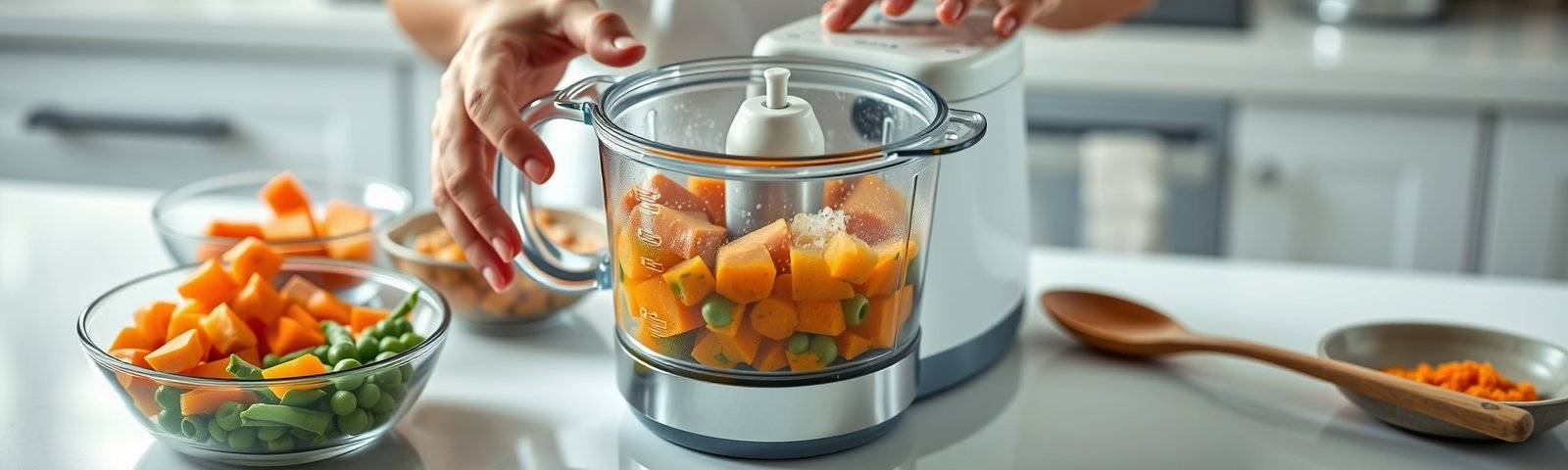
A baby food maker may be useful if you regularly cook and blend small batches. An all-in-one model can reduce transfers between a saucepan and a blender, while a blending-only appliance may suit parents who already have a cooking routine.
Before buying, ask yourself:
- How often will I prepare homemade food?
- Will I make one portion or several?
- What equipment do I already own?
- Where will I store the appliance?
- Am I comfortable washing its parts after each use?
Homemade and commercially prepared baby foods can both have a place in your routine. Buying a machine is a practical choice, not a measure of your care as a parent.

Electric vs. Manual: Which Fits Your Routine?
Different tools solve different problems. Start with the preparation tasks you want help with.
| Option | May suit you if… | What to consider |
|---|---|---|
| All-in-one steamer and blender | You want cooking and blending in one appliance | Water-tank care, cooking limits, cleaning, and counter space |
| Electric blender or food processor | You already cook ingredients separately | Minimum batch size and control over consistency |
| Manual mill or masher | You prepare small amounts of soft, cooked food | Effort, texture, and suitability for your chosen ingredients |
| Existing kitchen equipment | You want to begin without another purchase | Whether it can process small quantities effectively |
A manual tool may be enough for foods that mash easily. An electric appliance may be more convenient for repeated blending. Neither option removes the need to prepare ingredients appropriately.
Pricing: What Are You Actually Paying For?
Instead of choosing by price alone, compare the features you expect to use.
A higher-priced appliance may include steaming, defrosting, reheating, extra containers, or automated programs. These additions have value only if they work with your routine.
Consider the full cost:
- The appliance and included accessories.
- Any additional containers you need.
- Replacement bowls, blades, seals, or trays.
- Delivery and return costs.
- Warranty coverage and support.
A useful question: If you removed the extra programs, would the main cooking or blending function still justify the purchase?
Check the current listing for prices and package contents. Similar-looking models may include different accessories.
Three Practical Gaps to Check Before Buying
Most buyer guides and product lists overlook three crucial risks:
- Can It Handle Small Portions? A large bowl is not automatically helpful when your baby is beginning with small amounts. Check the minimum quantity the appliance needs to blend effectively.
- Can You Clean Every Food-Contact Part? Look beyond “easy to clean.” Check whether the lid, seals, blade assembly, and bowl can be accessed as instructed. A short cooking cycle may feel less convenient if cleanup is complicated.
- Does It Fit Your Whole Routine? Preparation includes shopping, cooking, portioning, storing, serving, and cleaning. Think about the complete process rather than just the blending step.
For example, an appliance with a large capacity may suit batch preparation, but you still need suitable containers and freezer space.
Performance Features Worth Comparing
Focus on features that affect everyday use rather than treating wattage or advertised speed as a complete measure of performance.
Texture Control
Look for controls that let you adjust consistency. Your baby’s feeding skills will develop, and the appliance should not dictate how long you offer smooth purées.
Cooking Instructions
If the machine steams food, check which ingredients it supports, how they should be cut, and the maximum load. Different foods may need different preparation.
Cleaning and Maintenance
Find out:
- Which parts are removable.
- Which parts are dishwasher-safe.
- How blades should be handled.
- Whether seals require separate cleaning.
- How the water tank should be maintained or descaled.
Replacement Parts
A replaceable seal or bowl can be useful if a small component wears out. Check availability before purchasing.
Safety Information to Check Before You Buy
Start with an identifiable manufacturer, a clear model number, and accessible instructions. Look for :
- Instructions for assembly, operation, and cleaning.
- Warnings about blades, steam, and hot surfaces.
- Food-contact material information.
- Electrical requirements suitable for your location.
- Customer support and warranty details.
- Any recall affecting the exact model.
A “BPA-free” label describes one material characteristic; it does not establish the safety of the whole appliance. Likewise, do not interpret vague “FDA approved” wording as proof that a finished baby food maker has received a blanket endorsement.
If a seller lists a certification, check what it covers and whether it applies to that exact model. Avoid relying on an impressive list of unrelated standards.
During use: follow the manual’s loading limits, keep the appliance out of your child’s reach, and disconnect it before cleaning where instructed.
Storage Containers and Homemade Baby Food
You do not need containers that attach directly to the machine. You need containers suitable for food storage and for the temperatures at which you will use them.
Check that they are:
- Clearly labeled with preparation dates.
- Easy to clean.
- Undamaged.
- Suitable for freezing if intended for the freezer.
A Simple Storage Reference
| Food | Refrigerator | Freezer |
|---|---|---|
| Homemade baby food | 1–2 days | 1–2 months |
| Strained meat or egg baby food | 1 day | 1–2 months |
| Meat-and-vegetable combinations | 1–2 days | 1–2 months |
This table follows FoodSafety.gov’s baby-food guidance. Keep the fridge at 40°F / 4°C or below and the freezer at 0°F / −18°C or below. These times assume appropriate preparation and continuous cold storage.
For weekly preparation, freeze the extra portions rather than refrigerating the entire batch for seven days.
Serve from a separate bowl with a clean utensil. Discard food remaining in the feeding bowl after the meal; do not return it to the stored batch.
A Practical Checklist for Comparing Reviews
A useful review explains what an appliance can do and what using it involves.
Look for answers to these questions:
- Is the review based on hands-on testing or published specifications?
- Which exact model was reviewed?
- Noise readings (dB) for full operational cycles
- Can it blend a small batch?
- What must be washed after each use?
- Are the cooking and cleaning instructions clear?
- What accessories are included?
- What limitations did the reviewer identify?
Be cautious with claims such as “preserves all nutrients,” “completely safe,” or “works for every stage” when no explanation supports them.
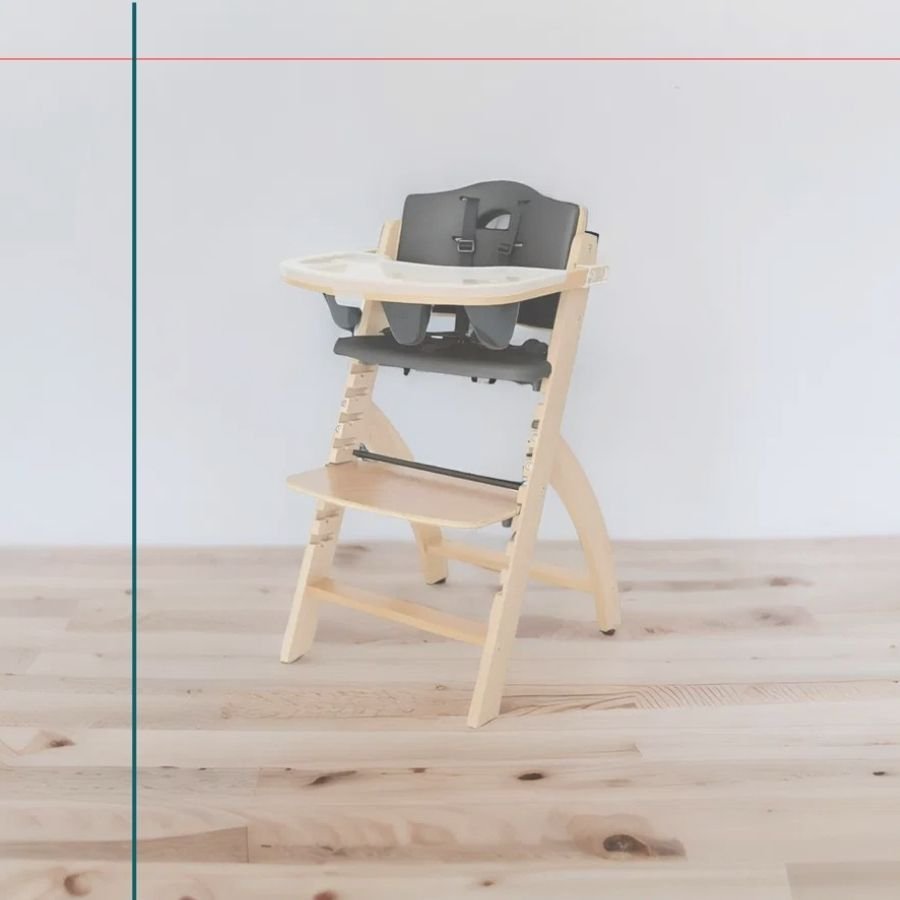
For another part of your feeding setup, explore our wooden high chair comparison.
How to Build a Manageable Meal-Prep Routine
Step 1: Begin When Your Baby Is Ready
Solid foods are generally introduced around six months, alongside continued breast milk or infant formula. Readiness includes head and neck control and the ability to sit with support. Ask your pediatrician if you are unsure. www.cdc.gov
Step 2: Prepare a Clean Workspace
Wash your hands, clean utensils and surfaces, and keep raw meat separate from ready-to-eat ingredients. Rinse produce under running water rather than using soap or household cleaning products. FoodSafety.gov
Step 3: Cook Appropriately
Follow the appliance instructions for ingredients and batch sizes. For meat and poultry, check doneness with a food thermometer against the appropriate cooking-temperature guidance rather than relying only on a timer.
Step 4: Adjust the Texture
Check the food before serving. Preparation should match your baby’s developmental skills. Blending alone does not guarantee an appropriate texture.
Seat your baby upright and supervise throughout meals. www.cdc.gov
Step 5: Portion and Chill Promptly
Use small, shallow containers to help food cool quickly. Refrigerate or freeze promptly instead of leaving a batch on the counter to cool completely.
Perishable food should not remain unrefrigerated for more than two hours—or one hour when the temperature exceeds 90°F / 32°C. FoodSafety.gov
Step 6: Thaw and Serve Carefully
Thaw frozen portions in the refrigerator. If reheating, heat leftovers thoroughly, then stir and allow them to cool to a suitable serving temperature.
Check temperature before feeding. A reheating program does not eliminate hot spots.
Simple Foods to Explore
Once your baby is ready, possibilities include cooked vegetables, mashed lentils, iron-fortified infant cereal, and appropriately prepared meat. Include variety rather than relying only on fruit purées. www.cdc.gov
Time-saving idea: Set out clean containers and labels before cooking. If preparing ingredients ahead, keep perishables refrigerated in suitable containers; do not preload the appliance unless its instructions permit this.
For more information about optimizing your day as a parent, check our guide on simple morning habits for moms.
Quick buyer checklist & final recommendations
If you want a swift answer, start here:
- Electric vs. manual: Choose electric for multitasking and consistency (70 percent of US buyers agree); manual for travel or backup only.
- Must-have certifications: FDA food-contact, ASTM F963, BPA-free, IEC/UL safety—insist on PDF download links.
- Minimum performance: Steam cycle under 20 minutes, blend capacity above 300 ml, cleaning under 10 minutes, noise below 65 dB.
- Storage approach: Only BPA-free or borosilicate glass, certified seal strength, follow validated shelf-life by temperature.
- Multi-parent/large families: Prioritize batch capacity (700+ ml), detachable bowl design, and auto-cleaning features.
- [ ] I know which preparation task I want help with.
- [ ] The minimum batch size suits my needs.
- [ ] I can adjust the consistency.
- [ ] I understand the cooking limitations.
- [ ] I can access and clean the required parts.
- [ ] I have space for the appliance and stored portions.
- [ ] Instructions and customer support are available.
- [ ] The total cost fits my budget.
For Occasional Preparation
Start by assessing the equipment you already own. You may not need a separate appliance.
For Regular Small Batches
Prioritize small-quantity performance and straightforward cleaning.
For Batch Preparation
Compare usable capacity, preparation steps, and freezer space. Larger capacity is useful only if you can handle and store the batch appropriately.
Common Pitfalls—and How to Avoid Them
Even with a well-researched purchase, parents often face pitfalls—here’s what the data and real users reveal:
- Performance overpromises: Lower-end models often advertise “quick” steaming/blending but lack the wattage or continuous heating capacity for reliable results with tougher produce (carrot, beets).
- Non-intuitive design: Some cup/bowl shapes make it hard to remove food without scraping, leading to waste and annoyance.
- Cleaning hassle: Multi-piece or narrow designs are hard to clean by hand and may not be dishwasher safe, risking hygiene.
- Certification gaps: Many products marketed as “BPA-free” show no external test certificates or compliance details—ask for the paperwork!
- Storage near-misses: Parents try to repurpose standard kitchen containers but encounter leaks or rapid freezer burn because brands don’t list compatible sizes or sealing test results.
Before committing, always check for external certifications and seek hands-on reviews that disclose granular test results.
| Pitfall | A more practical approach |
|---|---|
| Buying more capacity than you need | Check minimum batch performance |
| Assuming an automatic cycle guarantees doneness | Follow instructions and verify cooking |
| Treating “self-cleaning” as complete cleaning | Follow the full maintenance procedure |
| Keeping a week’s purées in the fridge | Refrigerate briefly and freeze extras |
| Preparing fixed portions based only on age | Begin with manageable amounts and observe feeding cues |
| Buying accessories before checking compatibility | Confirm the exact model and intended use |

Conclusion
A baby food maker can support homemade preparation, but it is one optional tool in your feeding routine.
Start with your actual needs: small portions or batch cooking, available space, texture control, and manageable cleaning. Then choose the simplest setup that meets them.
Your baby does not need elaborate meals or an expensive machine. Thoughtful preparation and a routine you can sustain are a good place to begin.
Considering an appliance? Explore the linked options and compare their instructions, features, and current package contents before deciding.
FAQ
Do I Need a Baby Food Maker to Start Solids?
No. Depending on the food, a fork, masher, blender, or food processor may be enough. A dedicated machine is optional.
Is Homemade Baby Food Automatically Healthier?
Not automatically. Ingredients, variety, preparation, and storage matter. Choose an approach that meets your baby’s needs and works for your family.
How Long Can I Keep Homemade Baby Food in the Fridge?
Use the 1–2-day reference above, with the shorter limit for foods that require it. Food already served in your baby’s bowl should be discarded after the meal.
Can I Freeze Homemade Purées in an Ice Cube Tray?
Yes, if the tray is suitable for food use and freezing. Cover it, then transfer frozen portions to an appropriate labeled container or freezer bag. Portion sizes depend on the tray. FDA
Can I Microwave Baby Food?
For suitable foods, transfer to a microwave-safe dish, stir, let stand, and check temperature. FDA guidance advises using the stovetop rather than the microwave for baby-food meats and eggs. FDA
Does a Baby Food Maker Prevent Choking?
No. Food preparation, texture, positioning, and supervision remain important regardless of the equipment used.
Should I Keep Every Meal Smooth?
Texture should develop with your baby’s skills. Do not use the machine’s settings as a substitute for guidance on feeding development.
Can I Add Honey?
Do not give honey before 12 months, including in homemade baby food. www.cdc.gov
Is “BPA-Free” Enough to Choose an Appliance?
It is only one consideration. Also check instructions, food-contact information, cleaning access, product identity, and support.
—